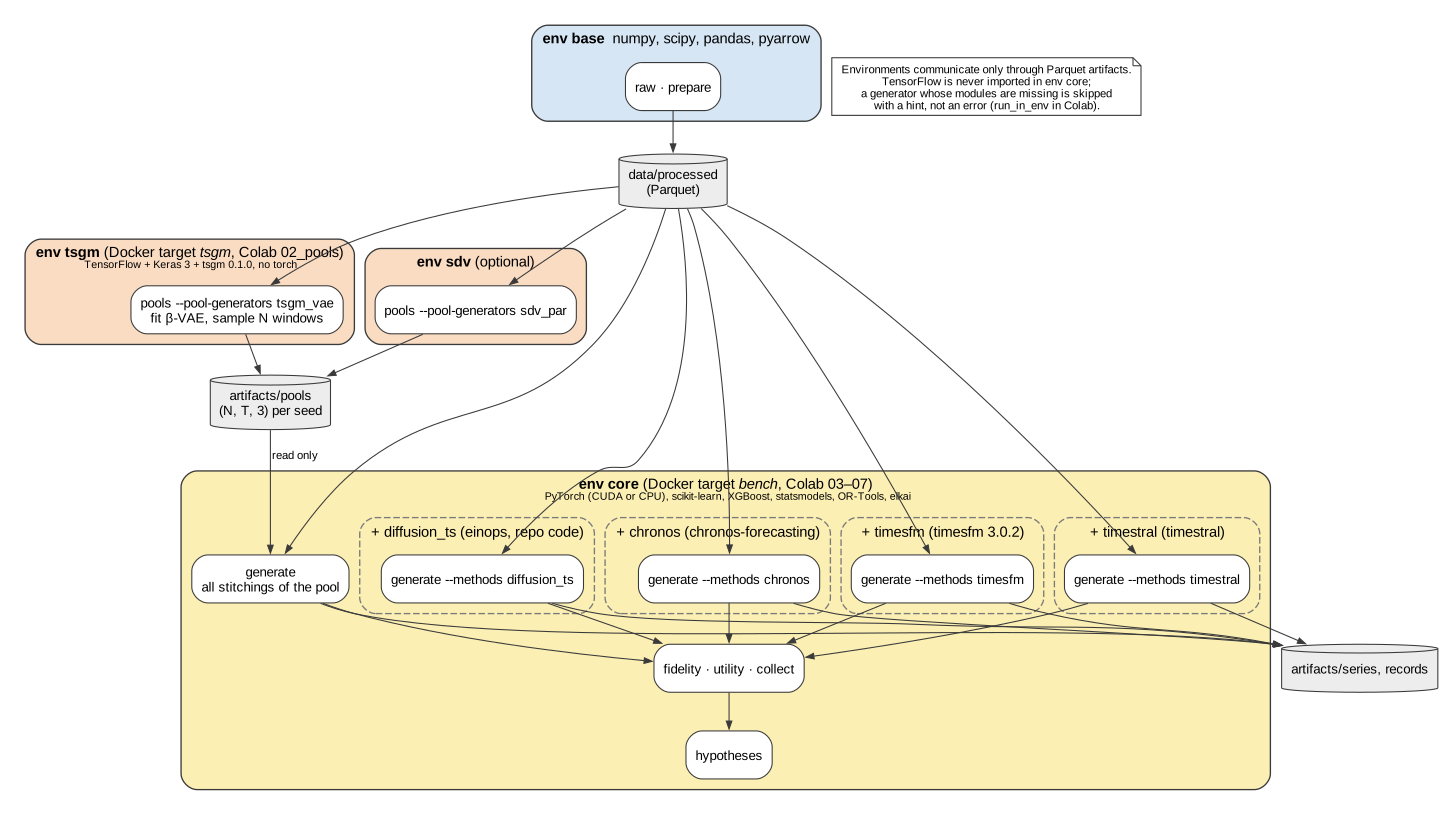
Figure 3 — Software environments and hand-off through artifacts
File: fig03_environments.pdf
Suggested caption. Isolation of conflicting dependencies. The VAE pool generator runs in a TensorFlow environment without PyTorch. Assembly, Diffusion-TS, Chronos, TimesFM, Timestral, evaluation and the statistics run in PyTorch environments that never imports TensorFlow. The only link between the environments is the Parquet files they write.
What the figure shows
| Environment | Requirements file | Runs | Main dependencies |
|---|---|---|---|
| base | envs/base.txt |
raw, prepare |
numpy, scipy, pandas, pyarrow, psutil |
| tsgm | envs/tsgm.txt |
pools --pool-generators tsgm_vae |
base + TensorFlow, Keras 3, tsgm 0.1.0 (no torch) |
| sdv (optional) | envs/sdv.txt |
pools --pool-generators sdv_par |
base + SDV |
| core | envs/core.txt |
generate (assembly), fidelity, utility, collect, hypotheses |
base + PyTorch, scikit-learn, XGBoost, statsmodels, ruptures, hmmlearn, elkai, OR-Tools |
| diffusion_ts | envs/diffusion_ts.txt |
generate --methods diffusion_ts |
core + einops + Diffusion-TS code |
| chronos | envs/chronos.txt |
generate --methods chronos |
core + chronos-forecasting |
| timesfm | envs/timesfm.txt |
generate --methods timesfm |
core + timesfm 3.0.2 |
| timestral | envs/timestral.txt |
generate --methods timestral |
core + timestral |
Notes for the text
- The pool is the interface between generator and assembler. The generator writes
(N, T, 3)windows toartifacts/pools.generateonly reads them, so every same-pool method sees exactly the same windows. - Each generator declares its environment and the modules it needs. If the modules are missing and the pool does not exist yet, the stage skips that generator and prints which environment to use.
- Docker: target
tsgmruns stage 2, targetbenchruns the rest. In Colab each notebook has its own runtime.run_in_env(...)creates a venv fromenvs/<env>.txtand runs the stage as a subprocess.