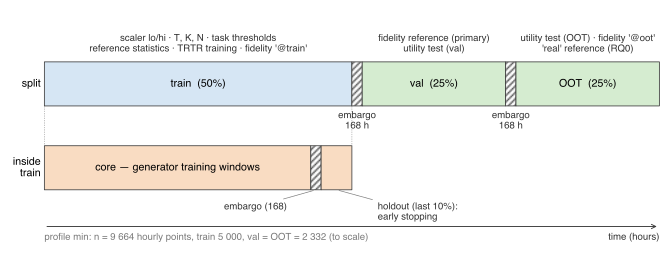
Figure 5 — Temporal split and the role of each part
File: fig05_temporal_split.pdf
Suggested caption. Temporal split (profile min, drawn to scale). Hatched bars are embargo
gaps of 168 h, wide enough to cover every label horizon h ≤ 168 and the longest feature lag (168).
Inside train, the last 10% is held out to stop generator training early. Every statistic the
methods may use comes from train. Val is the primary fidelity reference; train and OOT are also references. Val and OOT are the utility test
sets.
How to read it
- Top row: train (50%) | embargo | val (25%) | embargo | OOT (25%). In profile
maxthe shares are 60/20/20 over the full series. - Bottom row: train broken down for the generators: core windows | embargo (168 rows) | holdout. Core and holdout windows do not overlap.
- Labels above list what each part is used for.
Design rationale (for the paper)
- Fidelity is measured against three real references: val (primary, no suffix), train
(
@train) and OOT (@oot). Train shows how well a method reproduces the data it was fitted on — methods fitted on train, and methods that take reference statistics from train, use this data during fitting; val measures generalisation and OOT generalisation under drift. Two of the four rankings measure fidelity against val and OOT (holdout_clf,holdout_reg), two against train (train_clf,train_reg). - Real-versus-real reference. Pseudo-method
realuses the OOT series as a "synthetic" series (RQ0); it is a reference, not an upper bound, since OOT is shifted in time. OOT is shorter than K·T, so each method is also scored on its first len(OOT) points (@len) to compare at equal length. - Utility uses the same real val and OOT rows for TSTR and TRTR. OOT checks robustness to a shift in time (RQ5).